Think Before You Buy the SpaceX IPO on Day One
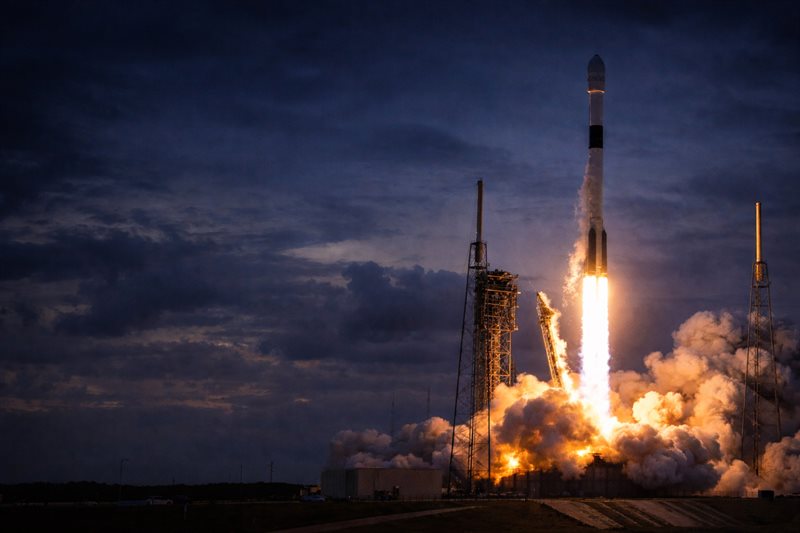
There is no hotter topic in the investing world right now than the upcoming SpaceX IPO. The company is targeting a valuation as high as $1.75 trillion and plans to raise roughly $75 billion when it lists, potentially as early as this summer.1 To put that in perspective, the current record for the largest U.S. IPO belongs to Alibaba, which raised $22 billion in 2014.2 SpaceX would shatter that record more than three times over.
The hype is real and the excitement is understandable. Starlink generated an estimated $10.6 billion in revenue in 2025, representing roughly 67% of SpaceX's total revenue, with margins closer to a software company than a traditional hardware business.3 That is a genuinely impressive business. And yes, they build reusable rockets. That is cool.
Cool, exciting, and hyped are words that describe a great story. They do not automatically describe a great trade on day one.
The IPO Game Is Not Rigged in Your Favor
When a company goes public, it hires a team of the most sophisticated investment banks on the planet to determine the offering price. SpaceX's deal involves Morgan Stanley, Bank of America, Citigroup, JP Morgan, and Goldman Sachs as lead underwriters, with 16 additional banks in supporting roles.1 These institutions spend months analyzing the company's financials, growth prospects, and competitive position before setting a price.
Think about what that means from a poker perspective. You are sitting down at a table where the other players have seen all the hole cards, studied every hand history, and spent the last six months calculating pot odds. You are buying in on the first hand. That is not a +EV spot.
The IPO price is set to be as high as the market will bear. The company and its early investors are, by definition, trying to sell at the best possible price. That is not a criticism. It is just how the process works. But it means the opening price already reflects a great deal of optimism.
The Valuation Math Is Staggering
At $1.75 trillion, SpaceX would trade at roughly 219 times trailing earnings and over 109 times trailing revenue.4 For comparison, Meta generates $200 billion in revenue and is currently valued at around $1.45 trillion.5 SpaceX would be asking investors to pay more for a company doing a fraction of Meta's revenue.
At 75 to 80 times forward revenue, you would need everything to go perfectly for years just for the company to grow into its valuation, let alone deliver meaningful upside.6 That is a very thin margin for error. In investing, just like in poker, you want a margin of safety: a cushion between what something is worth and what you are paying for it. Buying into a massive IPO on day one is often the opposite of that.
The xAI acquisition concerns many analysts. That division incurred more than a $1.4 billion loss on just $107 million in revenue in its last quarter as a standalone entity before being absorbed into SpaceX.6
History Gives Us a Clear Warning
Big, highly anticipated IPOs have a well-documented pattern. They generate enormous retail excitement, open with a surge, and then tend to drift lower over the following months as the initial hype fades and the realities of running a public company set in.
Looking back at major IPOs in 2025, many opened big and then sold off after a few months as hype faded and lock-up provisions expired.7 Lock-up expirations matter. When a company goes public, insiders and early employees cannot sell their shares for a set period, typically 90 to 180 days. When that window opens, a flood of new supply can hit the market, and prices often drop as a result.
One analyst noted that even with a great company and strong fundamentals, an IPO can still stumble if markets have turned south or volatility is elevated.2 The macro environment matters, and we have seen how quickly conditions can shift.
So What Should You Do?
None of this means SpaceX is a bad company or that it will never be a worthwhile investment. The Starlink business alone is a compelling long-term story, and the company's dominance in rocket launch infrastructure is not easily replicated.
But there is almost no reason to rush in on day one. Waiting for more information and a more reasonable valuation after the IPO settles is a sound approach. Mega-IPOs have not historically held their value well in the near term.6 Patience gives you real advantages: you get to see the actual S-1 financials rather than rumored numbers, you can observe how the market digests the offering, and you may find an opportunity to buy after the frenzy cools, potentially at a much better price.
The best poker players do not feel compelled to play every hand. They wait for the spots where the odds tilt in their favor. Investing works the same way.
SpaceX may well be a great company. Day one of its IPO is probably not a great trade.
← Return to Site— QuickInvestIQ